Reparations Program / Mrs. Awa Nana-Daboya “We are not inventing anything, the CVJR has already calculated everything”
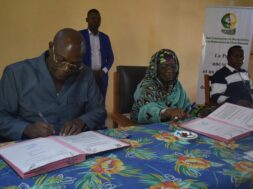
The Reparations Programme, one of the key recommendations of the Truth, Justice and Reconciliation Commission (CVJR), was officially launched on March 24 in Lomé by Prime Minister Selom Komi Klassou.
The Programme covers all persons, regardless of nationality, who suffered harm as a result of politically motivated violence or serious human rights violations between 1958 and 2005.
The Reparations Programme is being implemented in several phases. The first phase focuses on the events of 2005, which are divided into two periods: the socio-political unrest following the death of President Gnassingbé Eyadéma on February 5, 2005, and the unrest following the presidential election of April 24, 2005.
For these two episodes, approximately 7,057 victims were identified. The allocation of CFAF 2 billion provided by the Government to the High Commission for Reconciliation and Strengthening National Unity (HCRRUN) is intended to compensate 2,475 victims. The remaining 4,582 victims identified in relation to the 2005 events will be compensated during a subsequent phase.
Overall, the CVJR identified 22,415 victims of politically motivated violence and serious human rights violations committed between 1958 and 2005.
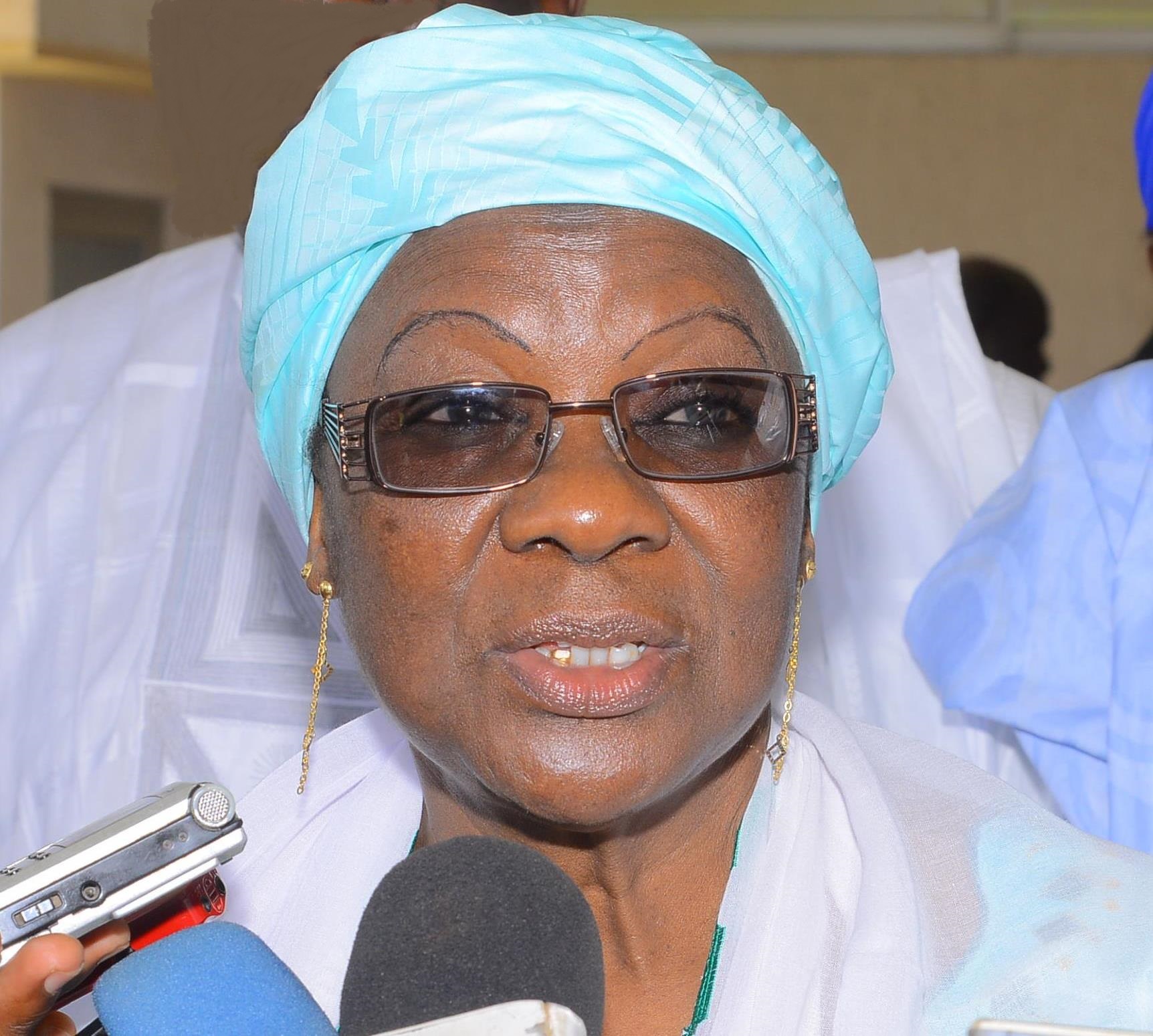
To understand all aspects of this program, Savoir News Agency approached the President of HCRRUN, Mrs. Awa Nana-Daboya
Savoir News: In your speech marking the official launch of the implementation of the Reparations Program on March 24, you emphasized the symbolic nature of the reparations that will be made to victims. What do you mean by the word “symbolic”?
Mrs. Awa Nana-Daboya: I would like to thank Savoir News for its initiative in helping to inform both national and international audiences.
We are dealing with the reparation of harm suffered by individuals. But can such harm truly be repaired? We often cite the example of a woman who, during the socio-political unrest, was raped, contracted HIV/AIDS as a result of that assault, and later discovered that she was pregnant. She endured violence and abuse. Can such a person truly be restored to her original condition? Reparation, in the strict sense of the word, means restoring someone to the state they were in before the harm occurred. That is impossible. She cannot return to her original condition, as she now carries the consequences of that violence for the rest of her life.
This is why transitional justice places particular emphasis on forgiveness, acceptance, and the willingness to turn the page in order to build a more peaceful future. Forgiveness cannot be measured in monetary terms.
HCRRUN inherited from the CVJR a reparations programme identifying victims, the harm they suffered, and the corresponding compensation amounts. These amounts are symbolic. They represent the State’s recognition of the victims’ suffering and its solidarity with them.
In situations of this nature, transitional justice does not seek to attribute responsibility to a specific individual. Rather, it recognises the responsibility of the State, which failed in its duty to protect its citizens. Having acknowledged this responsibility and expressed its apologies, the State provides symbolic financial reparations as a gesture of recognition and solidarity towards the victims.
The symbolic nature of these reparations reflects the Government’s willingness to seek forgiveness and the victims’ willingness to accept that gesture, turn the page, and establish a renewed social contract with the State. Even in ordinary justice, courts sometimes award symbolic damages.
Are there activities that the HCRRUN plans to conduct in preparation for the actual compensation phase? If so, what are the objectives pursued by the HCRRUN through these preliminary activities?
In line with what I have just explained, we must first go out and explain the symbolic nature of these reparations to the population. We need to meet with the victims and their families to explain our mission, which is to lead the reparations process and promote national reconciliation. It is therefore essential to prepare all those concerned.
This is why HCRRUN is undertaking an information and consultation tour to help communities understand the significance of these symbolic reparations. We will visit the eight zones established by the CVJR for the implementation of its work, relying on the Local Peace Committees created in every prefecture with the support of UNDP.
The CVJR also recommended the organisation of religious and traditional ceremonies. Accordingly, religious communities will hold services, while traditional authorities will conduct libations, offerings, and prayers to honour those who lost their lives and promote healing and reconciliation. As Africans, we recognise the importance of these practices in restoring peace of mind. Our mission is reconciliation, but reconciliation begins with oneself, and for many, it is strengthened through faith and prayer.
These activities will therefore precede the compensation phase. For the compensation process itself, the CVJR has already established the list of beneficiaries together with the corresponding compensation amounts. Three compensation centres have been designated, and when the time comes, the victims concerned will be invited to receive the symbolic reparations provided for under the CVJR Reparations Programme.
But if you conduct all these preliminary activities, how much will you have left?
We are not inventing anything, the CVJR has calculated everything. Therefore, there is an operating fund allocated to conduct all these activities. The HCRRUN will strictly respect its terms of reference.
Referring again to your speech of March 24, 2017, we know that 2,475 victims will be covered by the initial amount of two (2) billion CFA francs allocated by the State. What we do not know, however, is how the HCRRUN was able to select the victims?
We inherited a reparations program developed by the CVJR where each victim is already categorized, with specific amounts. For this beginning, we have only selected victims from 2005 whose amounts are less than one million. We will post all the names when the time comes, and when the victims come forward, they will see the corresponding amounts next to their names.
And how did you determine the amounts?
We have not calculated anything. The CVJR has already done everything: the victims and the amounts. Next to each victim, an amount has been mentioned. We are only here to apply what the CVJR has done. We are not changing anything.
The main objective pursued by the HCRRUN is reconciliation among the daughters and sons of this country. But some are somewhat skeptical, arguing that for true reconciliation, the “alleged perpetrators” of human rights violations known in Togo must take the step, that is, acknowledge their wrongdoing. As was the case in certain countries that went through transitional justice to settle their past. Madam President, what is your response to them regarding the Togolese case?
We are dealing with transitional justice. It is different from classical justice. I often say that each victim knows their “torturer.” In transitional justice, the responsible party is the State. Because it is the State that allowed all these alleged perpetrators to commit their wrongdoing, for not having put sufficient means in place to protect one another. But if a victim knows well the perpetrator of their harm and wants to bring the matter to justice, the State is obliged to assist them so that justice may be served.
What is your final message, Madam President?
First, we must accept to turn the page and look toward the future. It is true, we all know it is difficult. We must avoid vengeance, avoid at all costs seeking to identify the alleged perpetrators. It is a way of reopening wounds, it is a way of opening the door to other conflicts. To the victims, we say: patience, compassion, and faith in God. Vengeance does not belong to this world. The alleged perpetrators know themselves and sometimes they see their victims. And do you think they sleep easily at night? Let us pray for the souls of all those who were wrongly buried and especially for the souls of those who still live with this heavy burden on their hearts. Because the victims have lighter hearts than the alleged perpetrators.