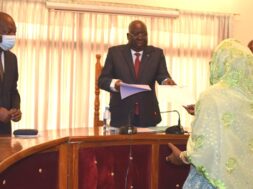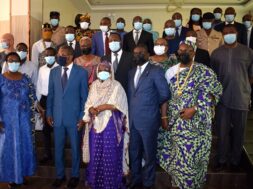
Since Monday, September 14, HCRRUN has been conducting a compensation session for individual victims of political violence in Togo in the Savanes Region. Primarily intended for individuals who suffered harm during the 1990s in connection with the wildlife-related incidents and the Barkoissi conflict between the Anoufo and Moba communities, this session is being conducted in strict compliance with COVID-19 preventive measures.
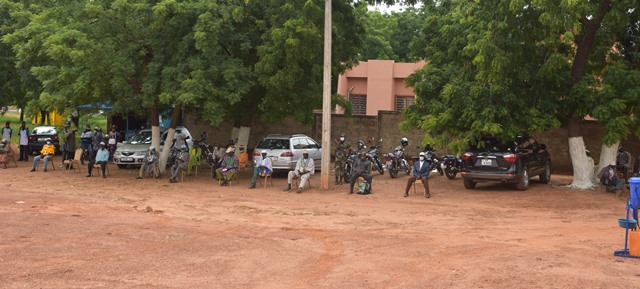
To prevent large gatherings during the compensation operations, HCRRUN has deployed several teams to reach out to local communities, receive victims, and serve them in small groups.
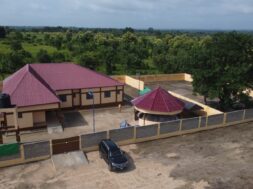
Thus, in Dapaong, the large hall of the prefecture is being used as a venue to receive and compensate victims from the prefectures of Tône and Cinkassé from Monday, September 14 to Wednesday, September 16, 2020. The operations then moved to the Directorate of Social Action in Mandouri from September 17 to 19 for victims from the prefectures of Kpendjal and Kpendjal-Ouest.
During the same period, from September 14 to 19, another HCRRUN compensation team operated in the prefecture of Tandjouaré, first at the Youth Center for victims from the municipality of Tandjouaré 1, and then at the Nano High School for those from the municipality of Tandjouaré 2.
The compensation operations will continue from September 21 to 26, 2020, at the Mango Youth Center for victims from the prefectures of Oti and Oti-Sud.
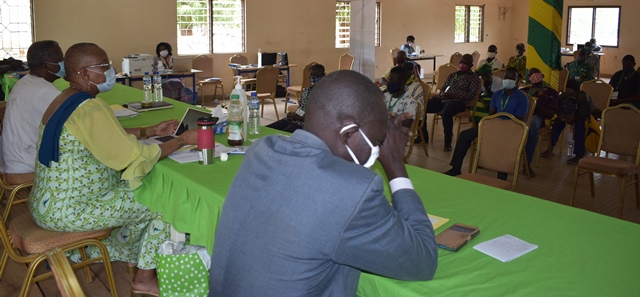
In practice, at each compensation site, a security perimeter is established and equipped with hand-washing facilities at the entrance. No one is allowed to enter the designated area without first washing their hands and wearing a face mask.
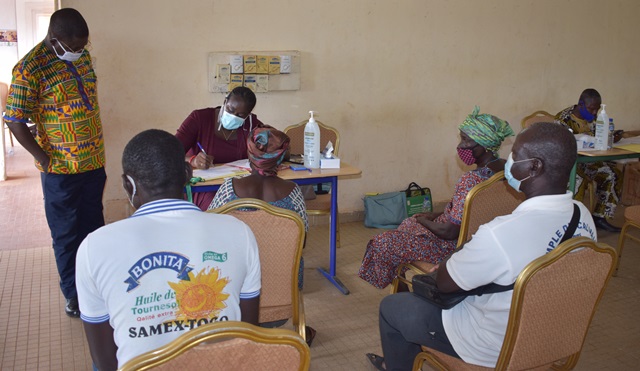
Victims are received in groups of fifteen and seated at a safe distance from one another. At each stage of the process, they are required to sanitize their hands with hydroalcoholic gel before and after each operation.
At the end of the process, each compensated victim receives a new pair of face masks, along with awareness-raising materials on preventive measures against COVID-19.