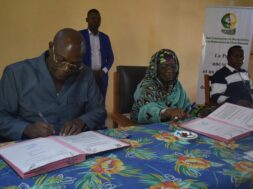
Implementation of CVJR Recommendations: HCRRUN Launches the Reparations Phase
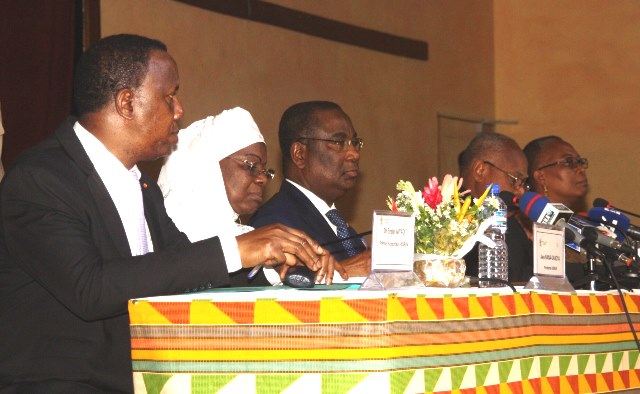
Through an official ceremony held in Lomé on Friday, March 24, 2017, the High Commission for Reconciliation and Strengthening National Unity (HCRRUN) officially launched the implementation of the Reparations Programme, marking the beginning of the second phase of its mandate.
The ceremony was presided over by Prime Minister Komi Sélom Klassou, representing the Head of State, Faure Gnassingbé.
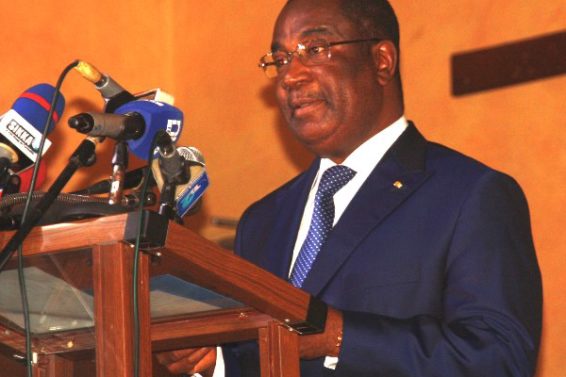
In his address, the Prime Minister reaffirmed the Togolese Government’s commitment to supporting the implementation of the Reparations Programme.
“The Government, under the leadership of the President of the Republic, has made the implementation of the Reparations Programme a national priority. In this spirit, and in accordance with the White Paper adopted on April 3, 2014, the Government is fully committed to ensuring the successful implementation of this process,” he stated.
He further recalled that, during its meeting of Thursday, March 23, 2017, the Council of Ministers adopted the regulatory framework establishing the compensation mechanism known as the Special Fund and designated its management body, thereby enabling HCRRUN to commence the implementation of the Reparations Programme without delay.
According to the Prime Minister, the process officially launched on that day would soon be translated into concrete action through the gradual payment of reparations to victims for the harm they had suffered.
The President of HCRRUN, Mrs Awa Nana-Daboya, recalled that the findings of the CVJR led to the development of a Reparations Programme covering victims of events grouped into three phases: the events from 1958 to 1962, those from 1963 to 2004, and those of 2005. The 2005 phase is further divided into two periods: the events of February 2005 and those of April 2005.
“When we consider that, out of a total of 22,415 victims identified by the CVJR for the period from 1958 to 2005, Phase III alone accounts for 7,075 victims, including all vulnerable victims requiring urgent medical care, it is clear why HCRRUN has chosen to prioritise this phase, where the memories remain the most recent and the most painful,” stated Mrs Awa Nana-Daboya.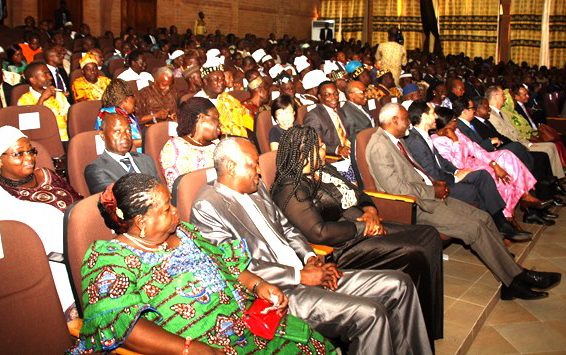
In concluding her address, the President of HCRRUN expressed her gratitude to the Government for once again responding favourably to the measures proposed by the Institution, thereby providing the necessary support for the successful implementation of its mission.
“Our Institution, now provided with the necessary resources, will fully assume its responsibilities and carry out its mission with diligence,” Mrs Awa Nana-Daboya concluded.
Her address was preceded by a welcome statement from Rear Admiral Fogan Adégnon, President of the Special Delegation of the City of Lomé, who expressed his satisfaction that the capital had been chosen to host the official launch ceremony.
HCRRUN announced that it would soon begin a nationwide programme of information and consultation meetings with victims, followed by purification ceremonies and the implementation of the compensation phase.
process.