The High Commission for Reconciliation and Strengthening of National Unity (HCRRUN) officially launched the construction of community infrastructure in Djéréhouyé on Friday, March 13, 2020. This initiative is part of the implementation of the community and collective reparations component of the reparations programme.
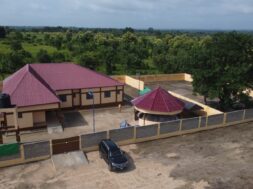
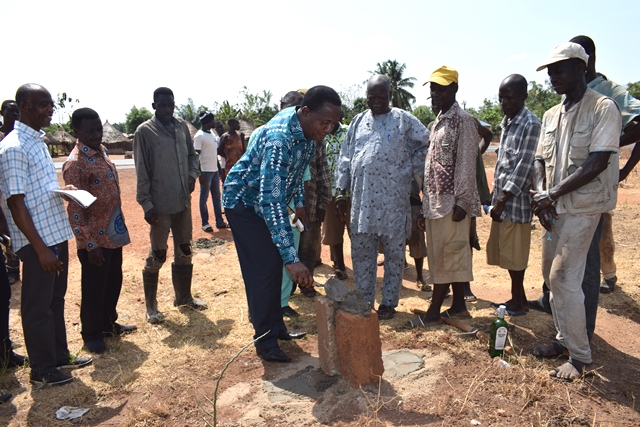
The ceremony included the laying of the foundation stone for the construction of a community meeting hall on a neutral plot of land, which will serve as a venue for dialogue, discussions, and exchanges on issues affecting the life of the entire community. The project will also include the rehabilitation of the homes of the two representatives of the communities living in Djéréhouyé.
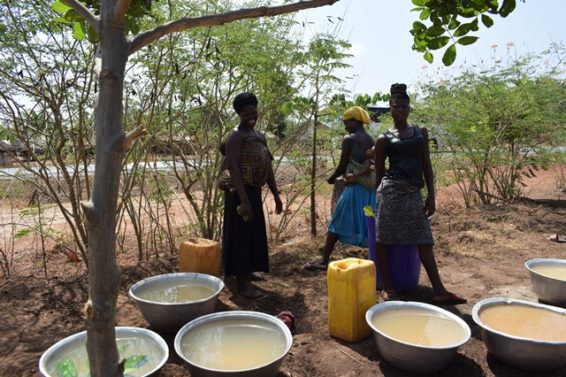
The objective is to promote peace between the Kabyè-Losso and Woudou communities, whose peaceful coexistence was disrupted in 2015 by socioeconomic and political tensions.
The foundation stone-laying ceremony for the rehabilitation and construction of infrastructure identified by the communities themselves was presided over by the First Rapporteur of HCRRUN, Mr. Evalo, and attended by local authorities and members of the beneficiary communities.
In order to promote cohabitation, integration, and strengthen peaceful coexistence between the communities, the works will be carried out by local workers and laborers.

It should be recalled that the construction of this community infrastructure is in response to Recommendation No. 54 of the Truth, Justice and Reconciliation Commission (CVJR), which states:
“The CVJR recommends that community and collective reparations be prioritized in cases of intercommunity conflicts and population displacement. These reparations, which may take the form of public utility works or development projects, must be distinguished from ordinary State projects. Furthermore, the CVJR recommends that particular attention be paid to land issues, traditional chieftaincy, and abuses of authority, which are often at the root of these intercommunity conflicts. Finally, the CVJR recommends that, where conditions permit, traditional reconciliation or mediation initiatives be undertaken to restore cohesion between social groups in conflict.”