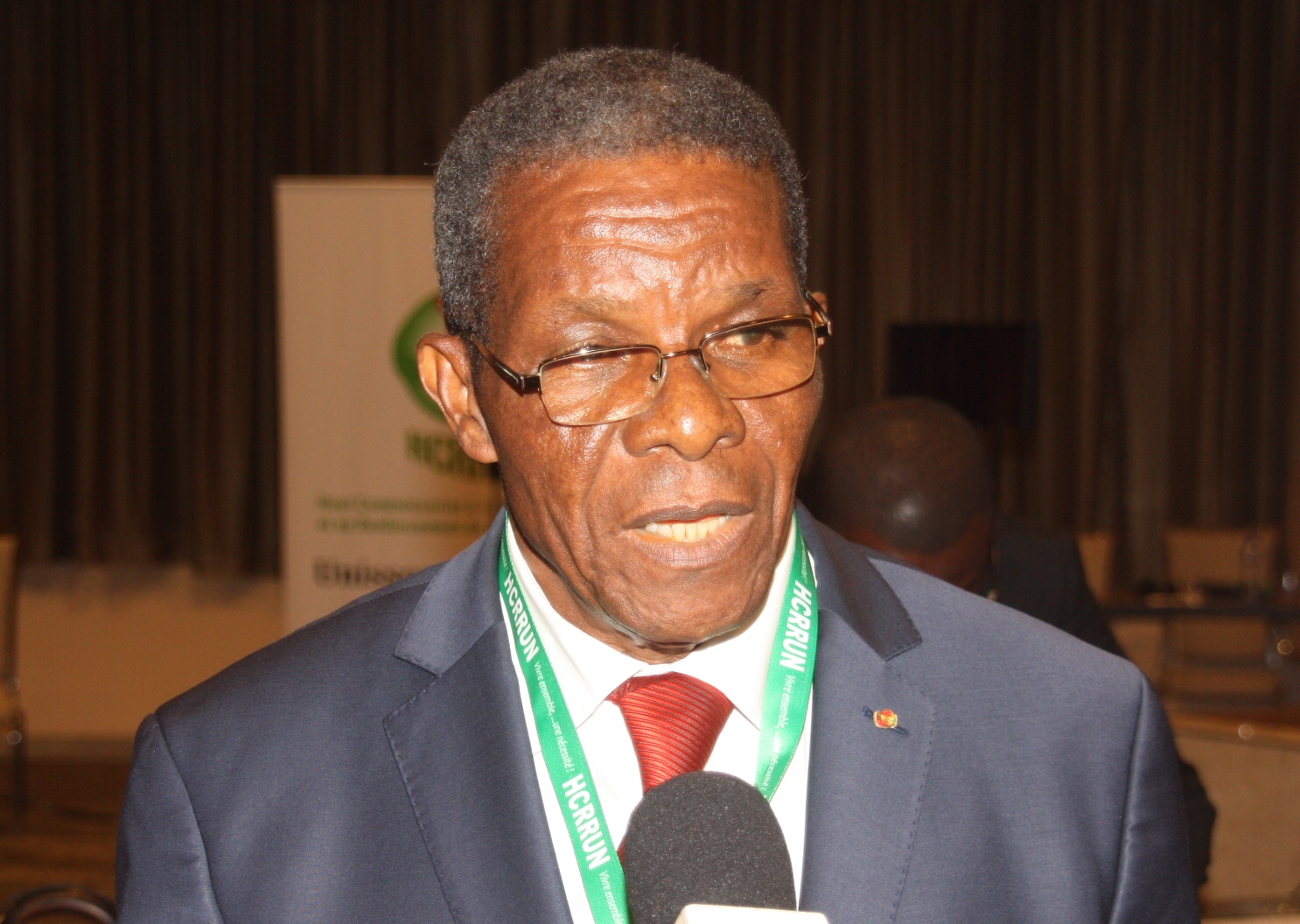
Four questions for Me Joseph Kokou KOFFIGOH, former Prime Minister of Togo
“ For me, the HCRRUN Workshop was a success”
At the end of the workshop for reflection and exchanges on political and institutional reforms in Togo, held from 11 to 15 July 2016, a few participants shared their views on the discussions and the prospects for the reform momentum. The High Commission for Reconciliation and Strengthening National Unity (HCRRUN) presents their contributions here. This week, the floor goes to Me Joseph Kokou KOFFIGOH, former Prime Minister of Togo.
1. In your opinion, what should be retained from the HCRRUN workshop in which you took part from 11 to 15 July 2016?
Me Joseph Kokou KOFFIGOH: For me, this Workshop was a success on four essential points:
– The quality of the organisation, notably the dedication of the supervisory staff, the reception service and the functional layout of the premises;
– The themes addressed, in that they touch on all areas of the political, economic, cultural and social life of our country;
– The atmosphere of the debates, marked by conviviality but also frankness, not forgetting the constructive spirit of participants from all sides;
– The results obtained, which should guide upcoming political decisions, in the short and medium term.
2. After the workshop, in your view, what approach should the various stakeholders adopt to make the reforms effective in Togo?
Me Joseph Kokou KOFFIGOH: First, on the government side, it must without delay analyse and take ownership of the results of the work, then set up a committee of experts to extract from them the elements likely to inform decisions in the short and medium term.
– On the side of the other political actors, they must seize the opportunity to raise awareness among their activists about the new chance offered to the country. They must take advantage of the occasion to deepen dialogue with those in power within the parliamentary and/or extra-parliamentary framework, so that the most important decisions that will be taken gain broad consensus upstream and downstream.
3. Should reforms be prioritised? If so, which ones should be carried out first?
Me Joseph Kokou KOFFIGOH: In my humble opinion, we must not bury our heads in the sand: constitutional and institutional reforms are those that first and foremost interest the political class; they are the ones that affect the legitimacy of governance. That does not mean that the others should be left aside. Everything related to a better organisation of Togolese society deserves attention. Not everything can be done on the same day, but it is urgent to begin little by little.
4. Your message to the various stakeholders who believe in the HCRRUN initiative of bringing together different actors called upon to reflect and exchange on political and institutional reforms…
Me Joseph Kokou KOFFIGOH: I recently told a radio station that Togo has emerged from a long illness. But it still needs treatment to heal definitively and prevent relapse. The HCRRUN initiative and the results it produced constitute a therapy that we must accept. If the prescribed instructions are conscientiously observed, there is no doubt that we will increase our chances of leaving the illness behind us. Consequently, those in power, the opposition, and civil society organisations must each work within their own sphere for a peaceful outcome to the envisaged reforms. As Monsignor Nicodème Barrigah repeats, everyone must do their part. I therefore invite each actor who believes in the relevance of the recommendations that came out of the HCRRUN workshop to play their part fully and sincerely, and to strive to convince the hesitant to adhere to them.