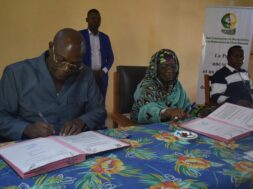
Implementation of the reparations programme / HCRRUN meets with the people of the Kara region
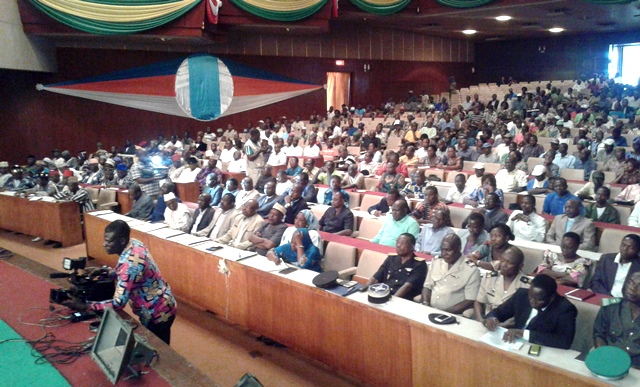
The HCRRUN delegation, on an information and consultation tour across Northern Togo, continued its outreach activities on Tuesday, May 16, with the population of the Kara Region. The main hall of the Kara Congress Palace welcomed participants from the region’s seven prefectures who had come to hear HCRRUN’s message.
The proceedings began with a brief message on peace and forgiveness delivered by the Vicar General of Kara Cathedral, followed by an opening prayer led by an evangelical pastor. In his welcome address, the Prefect of Kozah, Colonel Bakali Hèmou, expressed the commitment of the people of his prefecture and of the entire Kara Region to support HCRRUN’s Reparations Programme. He also thanked the Institution and the Togolese Government for this initiative.
Responding to the Prefect’s remarks, Dr Wiyao Evalo, First Rapporteur of HCRRUN and Head of the delegation, outlined the purpose of the information and consultation meeting, namely to secure the support and active participation of the population, particularly the victims, in the implementation of the programme. “Through these reparations, the State wishes to send victims a strong message of national solidarity. The reparations should reflect the State’s commitment to helping victims overcome their suffering,” he stated.
The two resource persons, Mr Alfa-Boukari Manaf and Mr Fidèl Pocanam, then delivered presentations on transitional justice and the reasons behind Togo’s adoption of this approach, and on the reparations process, respectively.
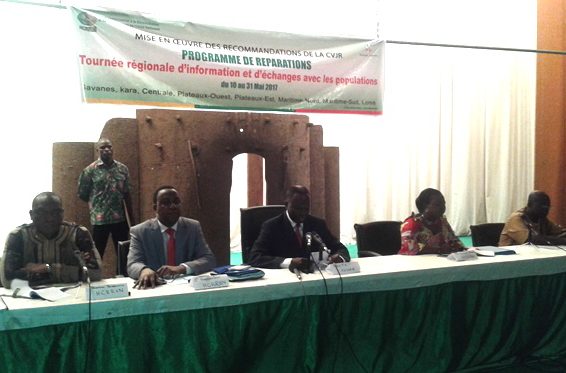
In his presentation, the first speaker retraced the process that led from the Global Political Agreement signed in 2006 to the establishment of HCRRUN, through the national consultations and the work of the CVJR. The second speaker presented the Reparations Programme, outlining its five forms of reparation and explaining why the financial component had been prioritised during this first phase of implementation by HCRRUN.
Participants, including direct and indirect victims, beneficiaries, and other members of the public, were then invited to ask questions, which were answered by the delegation.
At the close of the meeting, participants, particularly the victims, expressed their satisfaction while looking forward to the effective implementation of the compensation process.